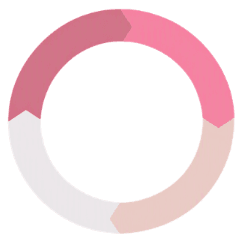

Menstrual Cycle Tracker
Go beyond period dates. Track your complete menstrual cycle — all four phases, every symptom, and every mood — to truly understand your body.
Start Tracking My Cycle FreeThe Four Phases of Your Menstrual Cycle
Understanding each phase helps you predict energy levels, moods, and fertility — and PeriodTracker tracks them all.
Menstrual Phase
Days 1–5
Uterine lining sheds. Hormones at their lowest. Rest and self-care are key.
Follicular Phase
Days 6–13
Estrogen rises. Energy increases. Great time for new projects and social connection.
Ovulation Phase
Around Day 14
Peak fertility. LH surge releases the egg. Highest energy and libido.
Luteal Phase
Days 15–28
Progesterone rises. PMS possible. Wind down toward next menstruation.
Menstrual Cycle Tracker FAQs
What is a menstrual cycle tracker?
A menstrual cycle tracker records your period dates, cycle length, symptoms, and moods to help you understand your personal cycle patterns. Over time, it predicts future periods, identifies your fertile window, and reveals hormonal trends that affect your daily life.
How is a menstrual cycle tracker different from a period tracker?
A period tracker primarily logs your bleeding dates. A menstrual cycle tracker goes further — tracking all four cycle phases (menstrual, follicular, ovulatory, luteal), symptoms throughout the cycle, moods, cervical mucus, and providing phase-based insights for the full 21–35 day cycle.
What cycle data should I track?
Track: period start and end dates, flow intensity each day, physical symptoms (cramps, headaches, breast tenderness, bloating), mood states, energy levels, sleep quality, and optionally cervical mucus characteristics and basal body temperature.
How long until cycle tracking is useful?
Even your first tracked cycle provides valuable baseline information. After 3 consecutive cycles, PeriodTracker generates meaningful predictions and begins identifying your personal cycle patterns. After 6 months, insights become highly personalized.
Can a cycle tracker detect health problems?
While cycle trackers don't diagnose conditions, consistent patterns in your data may prompt important conversations with your doctor. Significant irregularity, severe symptom clustering, or concerning trend changes in logged data can indicate conditions like PCOS, endometriosis, or thyroid disorders worth evaluating.